
Civil Infrastructure
Structural health monitoring
Monitor vibration, movement and stress to prevent failures and extend asset life.
Structural health monitoring
Structural health monitoring
Every structure tells a story. Bridges, tunnels, conveyors, and pipelines all change over time, sometimes slowly, sometimes all at once. Loads shift. Foundations settle. Materials age. Structural health monitoring helps turn those changes into information that engineers can act on before they become problems.
Orica Digital Solutions’ Geosolutions, supported by RST Instruments and Measurand, delivers systems that capture how critical structures behave under real-world conditions. Whether it is a bridge, a dam wall, or a piece of plant infrastructure, our technologies provide real-time structural health monitoring, tracking vibration, stress, and movement with the accuracy needed to keep people safe and operations running.
In practice, it means you see the warning signs early, plan maintenance with confidence, and keep key assets performing the way they should.
Why structural monitoring matters
No structure is truly static. Over time, temperature, load, and environmental conditions combine to change how materials react. In mining, vibration and settlement can accelerate that process; in civil infrastructure, weather, traffic, and natural events play their part.
Modern mining structural monitoring systems and infrastructure health monitoring programs make it possible to keep a continuous watch on how these assets behave. Sensors track deformation, tilt, strain, and displacement, what is known as structural deformation monitoring, giving engineers a detailed view of structural performance over time.
This is not just about compliance. It is about understanding behaviour. When stress builds, or movement starts where it should not, operators can see it right away and respond before the issue spreads. That is the value of reliable geotechnical structural monitoring, knowing what is normal, what is changing, and what it means for the integrity of your assets.
Benefits
Benefits
Driven by innovation and backed by our global R&D and technical networks, we deliver solutions that solve real operational challenges.

Improve safety

Data insights

Social license to operate
Solution powered by

Digital Solutions
Measurand

Digital Solutions
RST Instruments
Why choose Orica Digital Solutions?
Additional Benefits
Why choose Orica Digital Solutions?
Every structure faces its own kind of pressure. In mining, it might be vibration and load; in infrastructure, it could be weather, traffic, or time. Orica Digital Solutions brings together technology from RST Instruments, and Measurand to help operators keep a close eye on both.
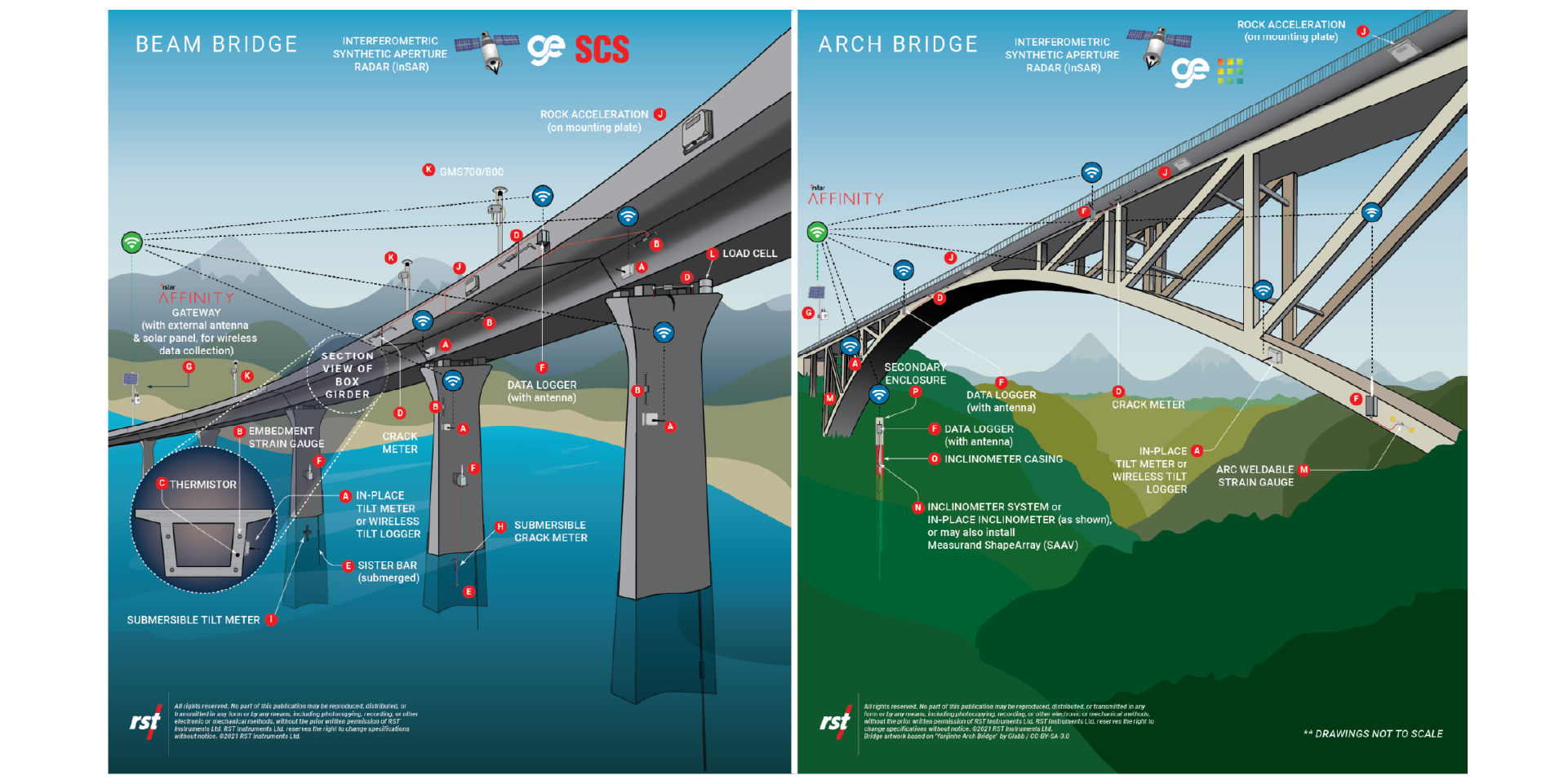
Each program uses a mix of radar, tiltmeters, strain gauges and linked with smart data analysis, to create a true picture of how the structure performs above and below ground.
- Mining structural monitoring systems – Built for industrious assets like conveyors, crushers, and processing plants. These systems track how each component handles vibration, load, and stress, keeping production steady and equipment safe.
- Civil and infrastructure health monitoring – For bridges, tunnels, rail lines, and energy facilities, our tools watch for the small shifts that happen long before cracks or deformation appear.
- Tunnel and underground structures – Underground spaces move in subtle ways. We measure those changes, shape, wall stress, so teams can react early and keep excavation safe.
- Dams and reservoirs – Water and time can wear away at even the strongest designs. Our instruments monitor displacement, strain, and pore pressure to catch instability or seepage before it spreads.
We stay involved from start to finish. Our engineers and geotechnical specialists set up, calibrate, and fine-tune each system to fit the site. Then they help your teams read the results, check thresholds, and make sense of what the data shows on the ground.
It is a partnership built on practicality. We bring the tools, the experience, and the ongoing support to help you cut downtime, plan maintenance smartly, and build long-term trust in the structures that keep your operation moving.
Turning insights into action
Data alone does not protect a structure, understanding it does. Orica Digital Solutions’ Geosolutions turns continuous readings into clear insight through real-time structural health monitoring. When the data shifts, the system flags it. When loads increase, you see where and why. When conditions stabilise, the records confirm it.
And as sites evolve, we evolve with them. Our specialists fine-tune sensors, update parameters, and adjust systems to stay aligned with the realities on the ground. It is ongoing support that helps operators make faster, safer, and more confident decisions.
If you are looking to strengthen your structural health monitoring program or bring new visibility to your mining structure monitoring and civil infrastructure, talk to Geosolutions. Together, we will build a monitoring approach that is robust, responsive, and made for the challenges of real-world operations.
Structural health monitoring FAQs
What is structural health monitoring?
It is the continuous tracking of stress, strain, and movement within structures such as bridges, tunnels, and plants to ensure they remain safe and stable.
How do structural health monitoring systems work?
Sensors measure vibration, deformation, and load in real time. The data is analysed through software to detect changes that may indicate wear, damage, or instability.
Why is structural health monitoring important?
It helps engineers identify early signs of structural stress or fatigue, reducing downtime, improving safety, and extending asset life.
Why is structural deformation monitoring important?
It helps detect small shifts or changes in a structure’s shape before they develop into serious issues. By tracking deformation over time, engineers can plan maintenance, prevent failures, and keep critical infrastructure operating safely and efficiently.
Blogs
Orica's industries

Industry
Agriculture

Industry
Civil infrastructure

Industry
Construction

Industry
Energy

Industry
Iron ore

Industry
Oil and gas

Industry
Quarrying

Industry
Surface coal

Industry
Surface metal

Industry
Underground construction and tunnelling

Industry
Underground mining
Want to know more about our solutions?
Want to know more about our solutions?
Contact an expert by completing the form.