People and communities

Respecting and upholding human rights

We are committed to respecting and upholding human rights across our workforce, operations and value chain, recognising our responsibility to the people and communities connected to our activities.

Our approach is guided by internationally recognised human rights standards, including the United Nations Universal Declaration of Human Rights, the UN Guiding Principles on Business and Human Rights, and the International Labour Organization’s Declaration on Fundamental Principles and Rights at Work.

Addressing modern slavery

Our dedication to protecting human rights extends throughout our operations and supply chains, and we continually work to improve how we detect and address modern slavery and wider human rights challenges. We also work to promote higher standards of practice across our industry.

As a global organisation, we are exposed to a range of modern slavery risks across the geographies in which we operate and the sectors from which we procure materials. We continue to make progress against our modern slavery commitments through ongoing risk assessment, supplier engagement and the continual strengthening of our governance and controls.

We recognise that businesses have a responsibility to respect human rights and to take appropriate action where risks are identified, including through remediation where required.

Respecting cultural heritage and First Nations communities

We seek to build respectful and meaningful relationships with First Nations peoples by recognising their enduring connection to the lands and waters on which we operate and by supporting the protection of cultural heritage. Our engagement is grounded in listening, partnership and mutual respect, and shaped by local cultural contexts and community priorities.

In Australia, we launched our second Reconciliation Action Plan (RAP) in 2025 — the Innovate Reconciliation Action Plan. The RAP builds on our ongoing work to strengthen relationships, deepen cultural understanding and support more meaningful engagement with First Nations peoples across our operations and communities.


In Canada, our ongoing partnerships with First Nations communities support community development initiatives, as well as education and employment opportunities.

Investing in our communities

Building long‑term relationships based on trust and transparency, and making targeted, strategic investments that deliver lasting positive outcomes for communities, are key focus areas for Orica. Guided by our Community Impact and Investment Framework, we invest in initiatives that align with community priorities and create enduring social value.
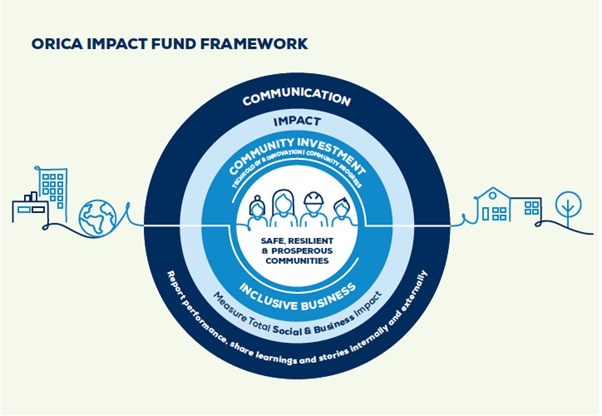
impact-fund-framework


Our strategic community investment focuses on three key areas:

  • Education: we partner with organisations to help children and young people develop foundational learning skills, supporting greater participation in society and improved access to long‑term opportunities.
  • Environment: we support environmental resilience in the communities where we operate by enabling long‑term environmental projects delivered in partnership with independent organisations and governments.
  • Stronger communities: we work with community organisations, schools and local partners to help build resilient, inclusive communities, supporting social connection, participation and positive outcomes for people and families where we operate.

In 2025, we were proud to report that community investments made through the Orica Impact Fund over its first five years surpassed our original $15 million commitment.

Strengthening responsible sourcing practices

We strive to work with suppliers who share our values and our commitment to ethical behaviour, operational excellence, and strong environmental and social performance. Through collaboration and ongoing engagement, we aim to build resilient, responsible supply chains that support our sustainability objectives.

Our responsible sourcing approach focuses on three key areas:

  • Setting clear expectations for suppliers: we communicate our expectations through supplier standards and contractual requirements that address ethics, human rights, health and safety, and environmental performance. These expectations are embedded in supplier onboarding, due diligence processes and ongoing engagement.
  • Identifying and addressing sustainability risks: we use a risk‑based approach to identify environmental, social and human rights risks across our supply chain. Where risks or gaps are identified, we work with suppliers to implement targeted improvement plans and build capability over time.
  • Monitoring performance and assurance: we monitor supplier performance through desktop assessments, evidence reviews and, if required, site‑based audits. We use insights to drive continuous improvement across categories and regions.

Latest disclosures

Our sustainability reports and supplementary materials provide further details about our performance.