
Underground Mining
Underground monitoring
Detect ground movements, enable timely decisions.
Underground monitoring.
Underground monitoring.
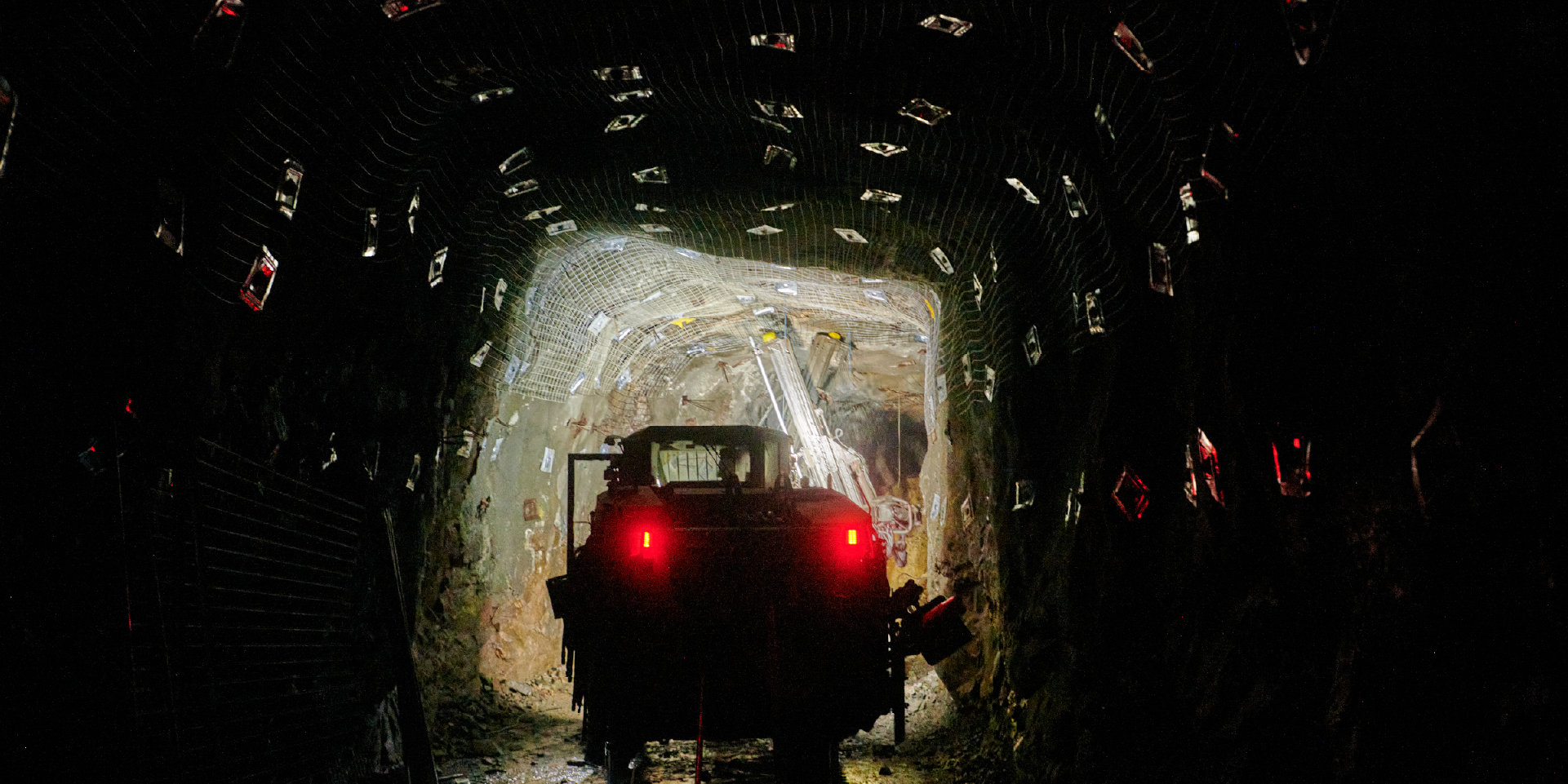
Underground mining brings challenges that never really stop changing. Rock moves. Stress builds. Ground conditions shift without warning. Down there, visibility is limited, and so is time to react. When safety depends on what you can’t always see, the quality of your monitoring system makes all the difference.
Orica Digital Solutions’ Geosolutions, together with RST Instruments and 3vGeomatics, delivers an underground monitoring system built for the real world. It keeps watch over every part of the operation, measuring convergence, tracking movement, and picking up subtle changes that signal risk. From radar to extensometers and data loggers, every component works together to give mine operators a clear picture of ground behaviour underground.
With that level of visibility, teams can act early, reduce exposure, and keep production moving safely.
Understanding the demands of underground mine monitoring
No two mines behave the same underground. Depth, rock type, and excavation method all play their part. Add seismic activity or heavy blasting, and the pressure on walls and pillars can shift overnight. In those conditions, you can’t afford guesswork.
Manual checks help, but only so much. Underground spaces are confined and unpredictable. Sending people in to inspect can slow work and add risk. That’s why reliable underground mine monitoring systems are critical. They gather the data continuously, without interruption, in places where people can’t always go.
Geosolutions brings multiple technologies together, radar, extensometers, and even satellite-based InSAR, to track what’s happening inside the mine and on the surface above. The result is a connected view of geotechnical performance that helps mine managers see change coming, not after it happens.
Benefits
Benefits
Driven by innovation and backed by our global R&D and technical networks, we deliver solutions that solve real operational challenges.

Improve safety

Operational efficiency and performance

Data insights

Social license to operate
Solution powered by

Digital Solutions
RST Instruments

Digital Solutions
3vGeomatics
A partner you can rely on.
Additional benefits
A partner you can rely on.
The systems are built for what mining throws at them, dust, heat, vibration, humidity. They’re made to keep working when everything else gets pushed to its limits. But technology only goes so far. What makes the difference is our support on site: engineers and geotechnical specialists who stay involved, reading data beside you, fine-tuning setups, and adapting programs as the ground shifts.
It’s not a one-off installation; it’s a working relationship. Innovation paired with field support, so your operation runs safely, efficiently, and with confidence in every call you make
Manage your underground monitoring with Geosolutions
Data is only useful if it tells a clear story. Geosolutions pulls radar, sensor, and satellite information into a single picture so you can see what the ground’s doing right now, not days later. You don’t just get measurements; you get meaning. When something moves, you know where and how fast. When things settle, you see it for yourself.
And we don’t disappear once the screens light up. As development pushes deeper, we stay connected, helping crews interpret trends, adjust thresholds, and keep every reading relevant. That steady involvement turns monitoring into something more powerful: a shared understanding of what’s really happening underground.
If better visibility and quicker decisions matter to your operation, connect with Orica Digital Solutions’ Geosolutions. We’ll shape an underground mine monitoring program that fits the way you work; accurate, adaptable, and built to stand up to the conditions you face every day.
Underground monitoring FAQs
What is underground monitoring?
It’s the continuous tracking of ground movement, stress, and convergence in tunnels, stopes, and underground workings to maintain safety and stability.
How do underground monitoring systems work?
Sensors and radar measure deformation and rock movement in real time. The data is sent to software that analyses trends and alerts teams when ground conditions change.
Why is underground monitoring important?
It helps detect potential hazards early, protects workers and equipment, and supports safer, more efficient mining operations.
What is the most common underground mining accident?
The most common accidents in underground mining are rock falls and ground collapses. These occur when unstable rock or unsupported areas fail unexpectedly. Effective underground monitoring systems help detect ground movement early, reducing the risk of these incidents and keeping workers safe.
Orica's industries

Industry
Agriculture

Industry
Civil infrastructure

Industry
Construction

Industry
Energy

Industry
Iron ore

Industry
Oil and gas

Industry
Quarrying

Industry
Surface coal

Industry
Surface metal

Industry
Underground construction and tunnelling

Industry
Underground mining
Want to know more about this solution?
Want to know more about this solution?
Contact an expert by completing the form.